
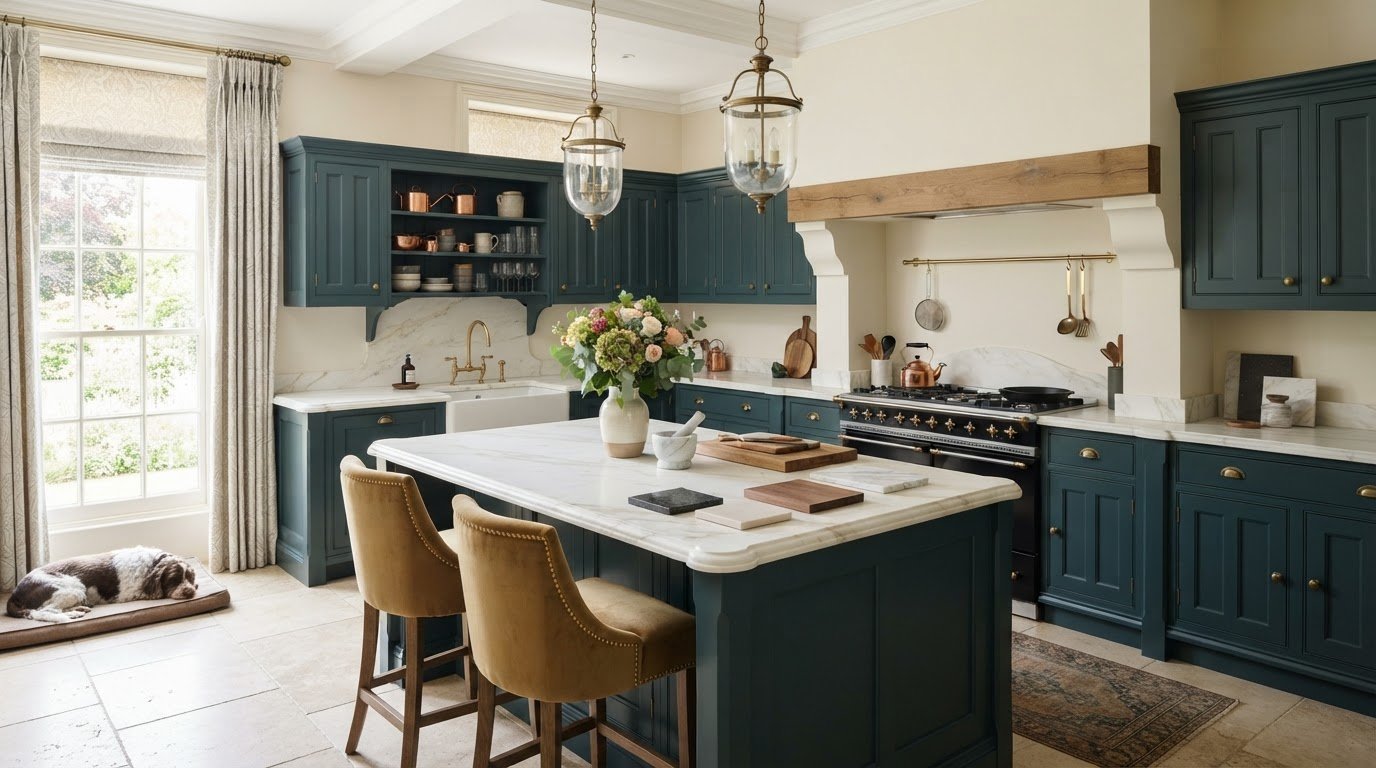
West Midlands Kitchen Worktop Comparison Guide
Published 9 October 2026 · Updated 9 October 2026
The most striking worktop isn’t always the best choice for a busy kitchen. A surface that catches your eye in a showroom may need more care than you want to give it, or sit uneasily beside your cabinetry. To compare different kitchen worktop materials: granite vs marble vs quartz vs wood, consider how each will look, feel and fit your everyday routine.
Granite, marble, quartz and wood each bring a distinctive character. Your cooking habits, spills and cleaning routine all affect which one may suit you best. This guide explains how to compare their appearance and care needs, so you can weigh practical considerations alongside the style you want. A worktop is also part of a wider scheme: its colour, pattern and proportions should work with the cabinetry and layout, whether you’re planning a traditional kitchen or a contemporary design.
Key Takeaways
- Compare different kitchen worktop materials: granite vs marble vs quartz vs wood, including their appearance and care needs.
- Weigh up appearance, everyday use and maintenance together. No single surface suits every household or kitchen design.
- Map out where you prepare food, cook and serve, then read the care instructions for the material and finish you’re considering.
- Consider colour, texture and proportions alongside your kitchen layout to create a cohesive worktop and cabinetry scheme.
- Use computer-generated visualisations to see how finishes sit with bespoke cabinetry while planning your design.
Table of Contents
- Choosing a Kitchen Worktop: Which Qualities Matter Most?
- Granite vs Marble vs Quartz vs Wood: How the Materials Differ
- How to Match a Worktop to Your Kitchen and Care Routine
- Bring Your Worktop Choice into a Bespoke Kitchen Design
Choosing a Kitchen Worktop: Which Qualities Matter Most?
Start with the look you want, then test that idea against daily life. A worktop should suit your cooking habits, preferred level of care and cabinetry. There’s no single surface that’s right for every household. A busy family kitchen used for regular meal preparation may need different qualities from a room where the island is mainly used for serving food and gathering.
When you compare different kitchen worktop materials: granite vs marble vs quartz vs wood, look beyond appearance and think about where each surface will be used. The overview of kitchen countertop materials offers broader context, but your own routines are the most useful starting point.
How cooking habits shape a worktop decision
Think about how often you cook and which areas see the most activity. Do you prepare meals along a long run of worktop, or do most tasks happen beside the hob or sink? Note where you chop ingredients, use appliances and unpack shopping. These busy preparation zones deserve particular attention. An island used mainly for serving, conversation or display has a different role, even within the same kitchen.
Be honest about your routines. If you use the worktops throughout the day, practical considerations matter as much as first impressions. A striking finish may still be right for you, but it should feel comfortable to live with, not just appealing in a sample.
How appearance and upkeep belong in the same decision
Picture the character you want to create. Natural variation can make a surface feel distinctive, while a more consistent pattern may provide a quieter backdrop. Veining, grain, texture and finish all influence the mood. Consider whether you’re happy to give a surface the care it needs, or would prefer a routine that feels straightforward. Care guidance varies by product and finish, so follow the instructions for the worktop you choose.
Think of the worktop as part of a composition, not an isolated feature. Its colour and texture should sit comfortably beside cabinet fronts, handles, flooring and the room’s other details. For wider planning, explore bespoke kitchen design, where the relationship between finishes, layout and cabinetry helps shape a cohesive scheme.
Granite vs Marble vs Quartz vs Wood: How the Materials Differ
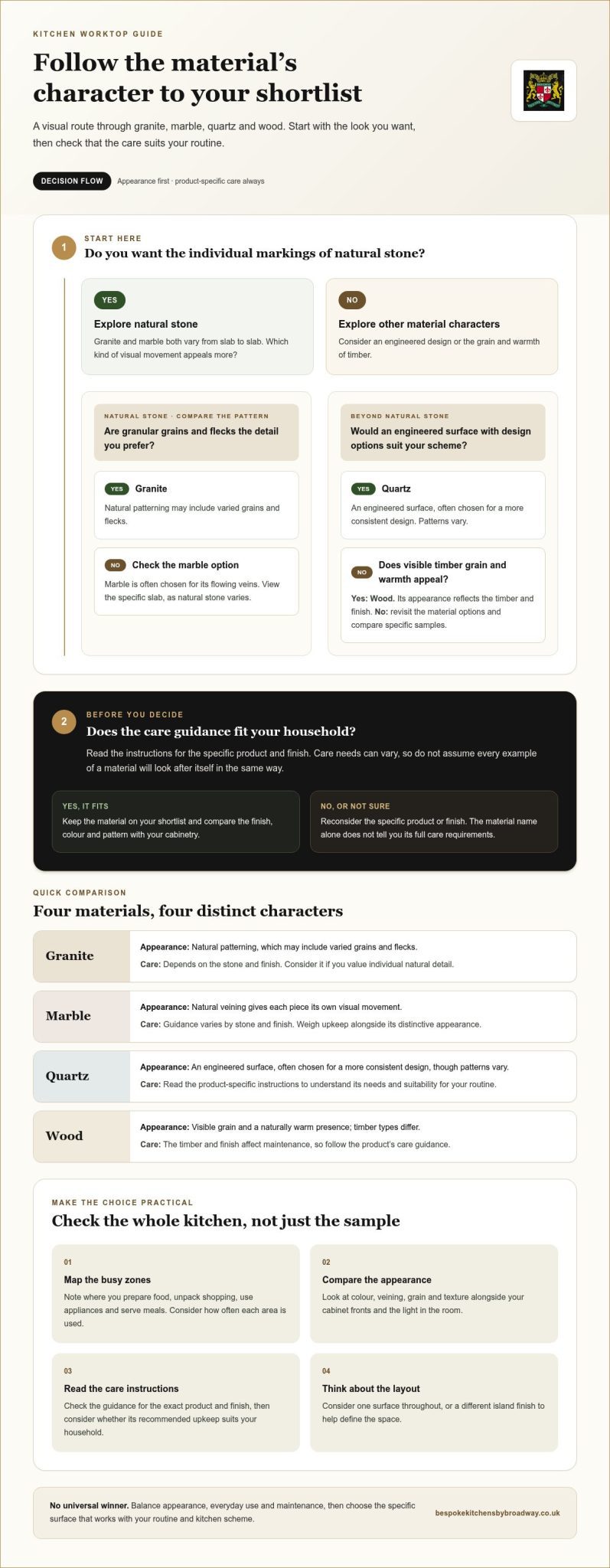
To compare different kitchen worktop materials: granite vs marble vs quartz vs wood, look beyond broad labels and consider the specific surface, finish and care guidance. Granite and marble are natural stones, so their markings can vary from slab to slab. Quartz is an engineered surface, while wood brings the visible grain and warmth of timber. Each has a distinctive character, and none is a universal winner for every kitchen.
| Material | Character and appearance | Care and household fit |
|---|---|---|
| Granite | Natural patterning, which may include varied grains and flecks. | Care depends on the stone and finish. Consider it if you value individual natural detail. |
| Marble | Natural veining gives each piece its own visual movement. | Care guidance varies by stone and finish, so weigh upkeep alongside its distinctive appearance. |
| Quartz | An engineered surface, often chosen for a more consistent design, though patterns vary. | Read the product-specific instructions to understand its care needs and suitability for your routine. |
| Wood | Visible grain and a naturally warm presence; timber types differ in appearance. | The timber and finish affect maintenance, so follow the product’s care guidance. |
Granite and marble: natural stone with individual character
With granite or marble, variation is part of the material’s appeal. Granite can have a more granular, varied pattern, while marble is often chosen for its flowing veins. The appearance and practical qualities can differ between slabs, so don’t assume that every example of either stone will look or perform alike. Use the care advice for the specific stone and finish to inform your decision.
Quartz and wood: engineered consistency or natural warmth
Quartz worktops are engineered rather than solid natural stone, and their appearance can range from restrained to strongly patterned. Wood offers a different kind of variation, with grain that reflects the timber and finish. Neither is automatically easier or better suited to every household. A guide to selecting kitchen worktop materials can provide further context. For your shortlist, use the care information for the specific product.
In brief, granite and marble offer the individuality of natural stone, quartz offers engineered design options, and wood brings a warm, grain-led quality. As you develop a bespoke kitchen scheme, share your kitchen design plans to explore how the worktop and cabinetry can sit together.
How to Match a Worktop to Your Kitchen and Care Routine
Turn your shortlist into a practical decision by testing each option against the jobs it will do, the care you’re happy to give it and the way it will look in your room. Compare different kitchen worktop materials: granite vs marble vs quartz vs wood using the same criteria, so you can make a clear comparison.
- Assess your routines. Note where you prepare food, put down shopping, use small appliances and serve meals. Consider how often each area is used.
- Shortlist the appearance. Look at colour, veining, grain and texture alongside your cabinet fronts and the light in the room.
- Review care. Read the specific product and finish instructions. Decide whether the recommended cleaning and upkeep suit your household.
- Consider the layout. Decide whether one surface should run throughout, or whether a different island finish would help define the space.
Which worktop suits a busy cooking routine?
Map the pressure points in your kitchen. A preparation area may encounter food spills, sharp tools and frequent wiping, while a serving surface might see less intensive use. Hot cookware can also affect some surfaces, so check the guidance for the exact material and finish rather than relying on broad claims about a whole category. The busiest areas should suit both the tasks you do there and the care your household can manage.
Apply this checklist to each zone:
- Main run: Where do chopping, food preparation and appliance use happen?
- Island: Is it mainly for preparation, dining, serving or gathering?
- Serving area: Will it see everyday use or occasional entertaining?
- Care: What cleaning and maintenance does the product guidance recommend?
How colour, pattern and layout affect the final choice
Natural veining and timber grain can add movement, while a more consistent pattern may create a calmer backdrop. Consider how the colour looks beside your cabinetry and in both natural and artificial light. One material can bring continuity across the kitchen; a contrasting island surface can create a focal point. For a centrepiece that balances function and visual interest, explore bespoke kitchen islands.
Bring your preferred finishes and layout together in a considered kitchen plan. Discuss your kitchen design plans with Broadway Kitchens and consider how the worktop and cabinetry can complement the room and your routines.
Bring Your Worktop Choice into a Bespoke Kitchen Design
A worktop becomes part of a room’s character when its colour, texture and proportions are considered alongside the cabinetry. A richly marked stone may call for quieter cabinet finishes, while a subtle surface can leave room for more decorative joinery. The aim isn’t to make every element match, but to create a thoughtful balance that feels at home in the space.
Coordinate the worktop with bespoke cabinetry
Consider the relationship between the worktop and cabinet colour in the context of the whole room. Natural veining or timber grain can provide a focal point, while the cabinetry’s finish and detailing help frame it. Proportions matter too: a strong pattern may feel different across a long run than on a smaller island. A bespoke scheme can be shaped around the material’s visual qualities, rather than treating the surface as a final add-on. Explore bespoke kitchen design to see how considered planning and craftsmanship bring the room together.
As you compare different kitchen worktop materials: granite vs marble vs quartz vs wood, picture each option beside the cabinet style and joinery you have in mind. Inspiration images can help communicate the mood, but the worktop’s scale and pattern should also make sense in your room and its light.
Move from material ideas to a considered kitchen plan
Bring useful reference points to a design conversation, such as inspiration images, preferred colours and notes about how you use the kitchen. It also helps to identify your priorities: a particular visual character, a practical care routine or continuity between the main run and island. These give the design process a clear starting point.
Broadway Kitchens offers a free design service with computer-generated visualisations, helping you consider finishes alongside bespoke cabinetry as you plan your kitchen. Its kitchens are designed, made in the company’s own Midlands workshops and installed across the UK, bringing in-house craftsmanship into a complete design-to-installation service.
Broadway Kitchens works with homeowners in Birmingham, Wolverhampton, Warwickshire, Cheshire, the West Midlands, Staffordshire, Worcestershire, Lincolnshire and Leicestershire, as well as offering nationwide installation. Discuss your bespoke kitchen design with Broadway Kitchens and take the next step towards a kitchen shaped around your home.
Shape a Kitchen That Feels Entirely Yours
A worktop is more than a finishing touch. It helps give the kitchen its rhythm and character, shaping how the room feels during a quick breakfast, a shared meal or a quiet moment at the island. As you compare different kitchen worktop materials: granite vs marble vs quartz vs wood, keep sight of the wider aim: a kitchen that feels considered, welcoming and unmistakably yours.
The choice can help set the mood for the whole room. A balanced palette of surfaces, cabinetry and details can feel calm and cohesive, while a distinctive feature can give the space more personality. Let the way you want to live in the kitchen guide the final design.
You don’t need every detail decided before taking the next step. Begin with the ideas that matter most to you and let them guide a design conversation. Discuss your bespoke kitchen design with Broadway Kitchens and start shaping a room made for the way you live.
Frequently Asked Questions
Can granite, marble, quartz and wood be combined in one kitchen?
Yes, different worktop materials can be used in separate zones if their colours, edges and proportions feel deliberate. Compare different kitchen worktop materials: granite vs marble vs quartz vs wood by considering how their appearance and care requirements will work together. For example, a contrasting island surface can become a focal point beside the main worktop. Plan joins and transitions as part of the overall kitchen design, rather than treating each surface as a separate choice.
Does granite need sealing?
Granite sealing requirements depend on the particular stone and its finish, so there isn’t one reliable rule for every worktop. Read the care guidance for the selected slab and follow its instructions. Avoid relying on a universal sealing interval, as appropriate advice can differ between products. If you’re comparing samples, include their care requirements in your decision alongside their appearance and the way you expect to use the surface.
Can you put hot pans directly on a kitchen worktop?
It’s safest not to assume a worktop can withstand direct contact with hot cookware. Heat tolerance depends on the material, finish and product specification, so follow the care instructions for your particular surface. A trivet is a sensible precaution, especially if you don’t know the exact specification. Keeping one near the hob or oven makes it easier to protect the worktop during busy cooking and when serving hot dishes.
Is wood a hygienic material for a kitchen worktop?
Wood can be used as a kitchen worktop, and its hygiene depends on its condition, finish and regular care. Clean it as directed for the specific product, and address damage or wear in line with the manufacturer’s guidance. Don’t assume timber is automatically more or less hygienic than stone or an engineered surface. Good everyday habits and product-specific care matter when keeping any kitchen worktop clean.
Can marble worktops stain or scratch?
Marble can be susceptible to marks and scratches, although the level of risk depends on the stone, finish, use and maintenance. This is a practical consideration, not an automatic reason to rule it out. If you appreciate its natural appearance, consider whether you’re comfortable caring for the selected surface according to its instructions. A considered choice balances the look you love with the way you use your kitchen.
Is quartz a natural stone worktop?
No, quartz worktops are engineered surfaces rather than slabs of solid natural stone. Their composition and appearance can vary between products, so read the information for the particular surface you’re considering. Granite and marble are natural stones, while wood has visible timber grain and its own care requirements. Understanding these distinctions helps you compare the character and practical considerations of each material without assuming they behave alike.
Related articles
17 October 2026
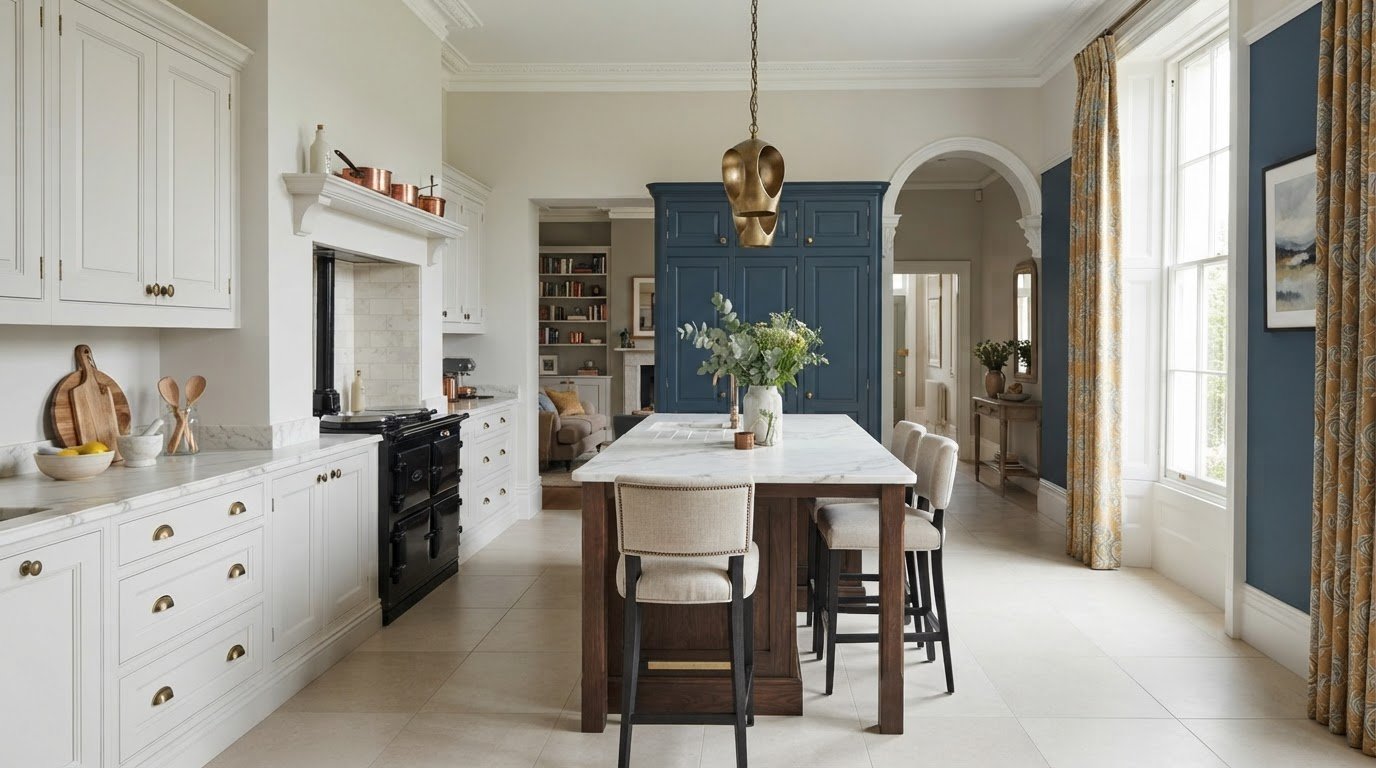
Bespoke Fitted Furniture Throughout the Home: Create a Cohesive Look
What if a connected home didn’t mean every room matching? Bespoke fitted furniture throughout the home can create a thoughtful design thread without…
Read article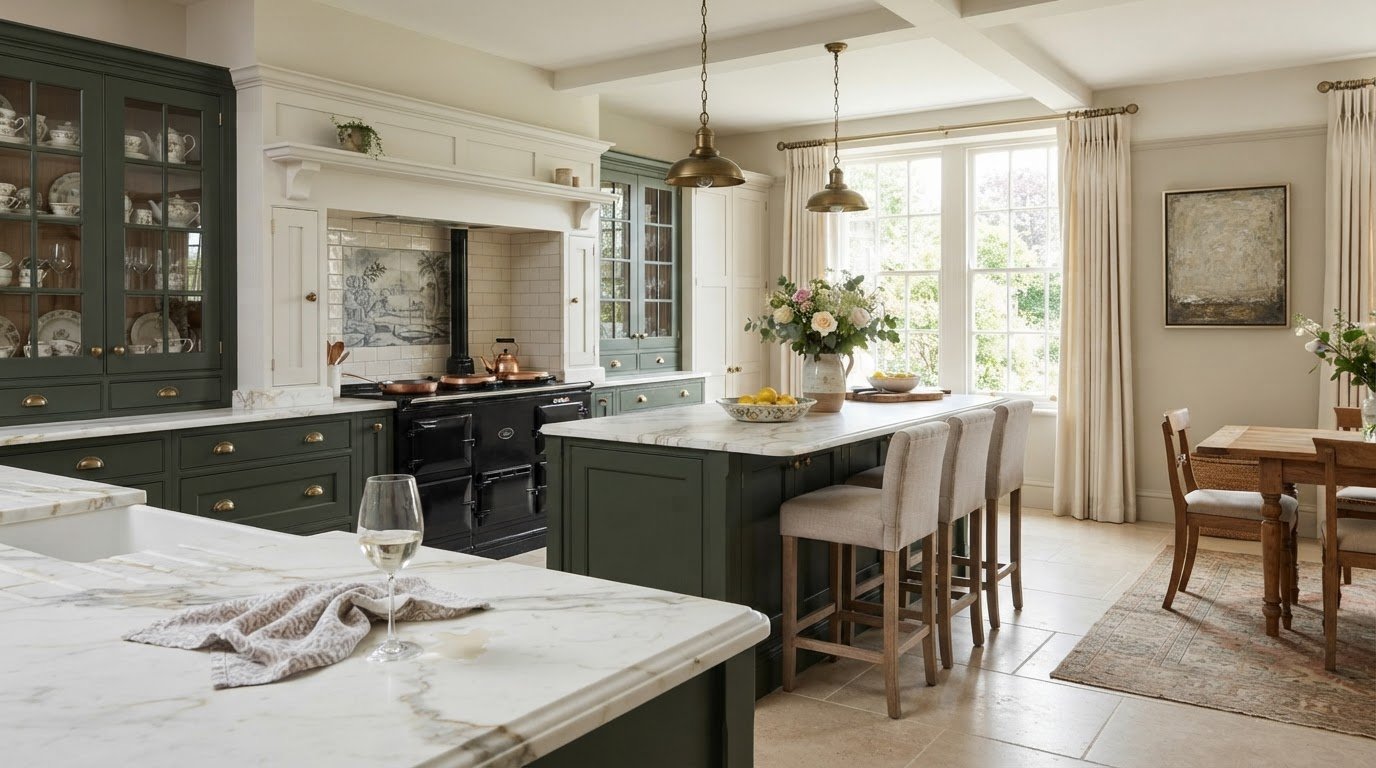
16 October 2026
Maintaining Marble Worktops to Avoid Stains: A Practical Guide
What if the pale mark on your marble worktop isn’t a stain at all? Acidic spills such as wine or citrus can dull the surface through etching, which…
Read article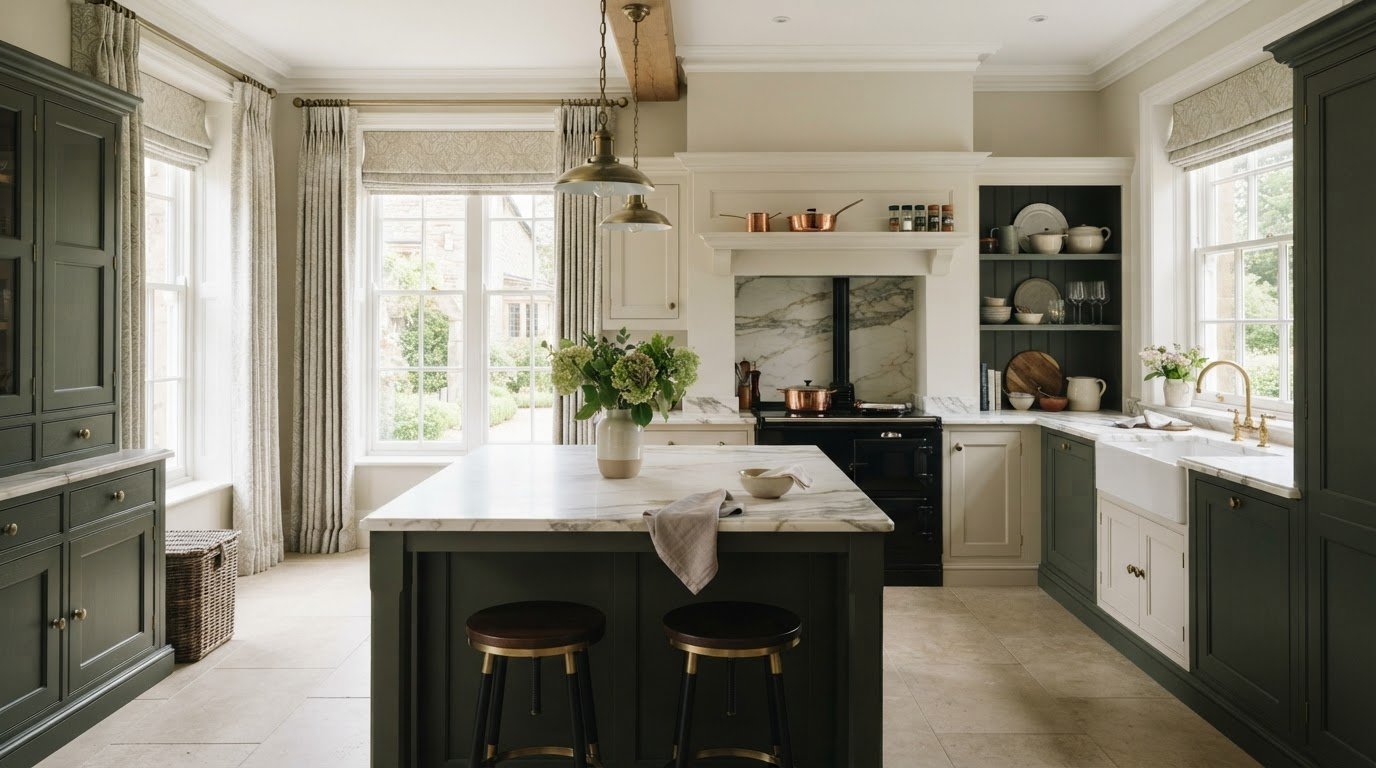
10 October 2026
Bespoke Solid Wood Kitchens: How to Clean and Care for Wooden Cabinets
What if the cleaner meant to make cabinet doors gleam is the very thing that dulls their finish? It’s an understandable concern: bespoke solid wood…
Read article
Request your free brochure
See our kitchens in full and talk to us when you are ready.
Prefer to talk? Call 0121 353 4999 or message us on WhatsApp.
Kitchens from £30,000.